Could an ancient medicinal herb help us cope with modern-day stress?Ashwagandha has become one of the most talked-about herbal supplements for relaxation, sleep and healthy ageing. But how much of its reputation is supported by science, and what should you know before taking it?
Used for centuries in traditional Ayurvedic medicine, ashwagandha is often described as an adaptogen: a natural substance traditionally believed to help the body adapt to physical and emotional stress.
Modern research suggests that certain ashwagandha preparations may provide modest benefits for stress and sleep. However, it is not suitable for everyone, and its potential effects on the liver, thyroid and immune system deserve particular attention.
Ashwagandha is traditionally used to support relaxation and resilience during periods of stress. Image: wellness illustration.
What Is Ashwagandha?
Ashwagandha, scientifically known as Withania somnifera, is a small shrub native to parts of India, the Middle East and Africa.
Its roots have been used in Ayurvedic medicine for hundreds of years, particularly in preparations intended to support vitality, resilience and general wellbeing.
The plant contains naturally occurring compounds called withanolides. Researchers believe these compounds contribute to some of its biological effects.
Modern supplements are available as capsules, powders, tablets and concentrated extracts. However, not all products contain the same plant parts or concentrations of active compounds.
1. Ashwagandha for Stress and Cortisol
One of the most promising areas of research involves stress management.
Cortisol is a hormone produced by the adrenal glands. It helps regulate blood glucose, blood pressure, metabolism and the body’s response to stress.
Cortisol is essential for good health. The objective is not to eliminate it, but to maintain normal hormonal regulation.
Several small clinical trials have found that certain ashwagandha extracts may reduce perceived stress and, in some participants, cortisol measurements.
Researchers have proposed that ashwagandha may influence the hypothalamic-pituitary-adrenal (HPA) axis, which coordinates the body’s stress response.
Natural health perspective: Ashwagandha may be a useful short-term option for some adults experiencing stress, but it should not replace addressing the underlying causes of persistent stress.
2. Can Ashwagandha Improve Sleep?
Difficulty falling asleep, waking during the night and feeling unrefreshed in the morning are common complaints.
Research suggests that some ashwagandha preparations may modestly improve sleep quality and sleep duration, particularly in adults experiencing insomnia.
Possible benefits include:
Improved subjective sleep quality.
Modestly shorter time taken to fall asleep.
Small improvements in total sleep duration.
Reduced stress-related sleep disturbance.
However, the research is relatively small, and the results do not establish that ashwagandha is an effective treatment for every sleep disorder.
When Should You Take Ashwagandha for Sleep?
Some clinical trials have used ashwagandha in the evening, while others have divided the daily dose between morning and evening.
There is no strong evidence that one particular time of day is best.
If a healthcare professional considers it suitable, follow the product’s directions and monitor for daytime drowsiness.
A consistent bedtime, morning daylight, regular exercise and reduced evening caffeine remain important foundations of healthy sleep.
3. Does Ashwagandha Help Anxiety?
Some studies report improvements in anxiety symptoms, particularly where anxiety occurs alongside stress.
However, evidence remains less certain than it is for general perceived stress.
Ashwagandha should not be considered a replacement for psychological therapy or prescribed treatment for an anxiety disorder.
Persistent anxiety deserves assessment, especially when it affects sleep, relationships, daily activities or quality of life.
4. Ashwagandha and Inflammation
Ashwagandha contains compounds that have demonstrated anti-inflammatory and antioxidant effects in laboratory and animal studies.
This has generated interest in whether the herb might benefit people with chronic inflammatory conditions.
However, laboratory findings do not necessarily translate into proven clinical benefits.
There is currently insufficient reliable evidence to recommend ashwagandha as a treatment for rheumatoid arthritis, osteoarthritis or other inflammatory diseases.
Important: Ashwagandha may influence immune activity. People with autoimmune conditions should generally avoid it unless their treating specialist has specifically assessed the risks.
5. Ashwagandha for Energy, Strength and Healthy Ageing
Ashwagandha is frequently marketed as a supplement for vitality, exercise recovery and physical performance.
Small studies have explored possible improvements in strength, fatigue and exercise capacity.
While some findings are encouraging, the evidence is not strong enough to establish reliable benefits for athletic performance or healthy ageing.
For maintaining muscle strength as we age, the most established approaches remain:
These strategies provide a stronger foundation than relying on herbal supplements.
6. Does Ashwagandha Improve Memory and Brain Health?
Some preliminary research has investigated whether ashwagandha may influence attention, memory and cognitive performance.
Although certain small trials have reported positive results, there is not enough high-quality evidence to conclude that it prevents dementia, improves long-term brain health or treats cognitive impairment.
For brain health, regular physical activity, blood pressure management, social engagement, good sleep and a balanced diet have a more established role.
7. Does Ashwagandha Lower Homocysteine?
Homocysteine is an amino acid involved in normal protein metabolism. Elevated blood levels may be associated with nutritional deficiencies and certain medical conditions.
Although ashwagandha has been studied for stress and oxidative stress, there is insufficient clinical evidence that it reliably lowers homocysteine.
If homocysteine is elevated, investigating nutritional deficiencies, kidney function, thyroid function and relevant medications is more appropriate than using ashwagandha as a treatment.
How Much Ashwagandha Should You Take?
Clinical studies have used different preparations and doses, making direct comparisons difficult.
Preparation
Amounts Studied
Important Information
Standardised root extract
Often 250–600 mg daily
Commonly studied for stress and sleep; not a universal recommended dose
Concentrated extracts
Varies substantially
Products differ in extraction methods and withanolide content
Traditional root powder
Amounts vary
Not directly equivalent to concentrated extracts
These are research ranges, not personalised dosing instructions.
There is no universally established safe or effective dose for all adults.
Most clinical studies have lasted approximately six to twelve weeks. The safety of taking ashwagandha continuously for many months or years is not well established.
Practical advice: Do not assume a higher dose produces better results. Product strength, other medications and individual health conditions are more important than simply increasing the amount.
Important Side Effects of Ashwagandha
Ashwagandha is often promoted as a gentle natural remedy, but natural substances can still produce significant side effects.
Possible Side Effect
What to Know
Drowsiness
May increase sedation, particularly with sleep medicines or other sedating substances
Very rare but potentially serious cases have been reported
A Serious Precaution: Ashwagandha and Liver Health
In July 2026, Australia’s Therapeutic Goods Administration (TGA) published an updated safety warning concerning ashwagandha and liver injury.
The regulator reported that cases of liver injury associated with ashwagandha continue to be identified in Australia and internationally.
Although these reactions appear very rare, some international cases have involved liver failure.
People with current or previous liver disease should avoid ashwagandha.
Warning Signs That Require Medical Attention
Yellowing of the skin or eyes.
Dark urine.
Unusual or severe fatigue.
Persistent nausea or vomiting.
Abdominal pain.
Loss of appetite.
Unexplained weakness.
If these symptoms develop while taking ashwagandha, stop the supplement immediately and seek medical advice.
Sudden severe vomiting or diarrhoea can also occur as an adverse reaction and warrants stopping the product and obtaining medical assessment.
Who Should Avoid Ashwagandha?
Ashwagandha is not appropriate for everyone.
Pregnant or breastfeeding women: Avoid use because of potential risks and insufficient safety evidence.
People with autoimmune diseases: Generally avoid unless a specialist advises otherwise.
People taking immunosuppressants: Possible interactions require medical review.
People with thyroid disorders: Ashwagandha may affect thyroid hormone activity.
People with liver disease: Avoid because of reported liver injury.
People preparing for surgery: Avoid unless cleared by the surgical team.
People taking sedatives: Increased drowsiness may occur.
People with hormone-sensitive prostate cancer: Avoid because of possible hormonal effects.
Special Warning: Rheumatoid Arthritis and Methotrexate
People with rheumatoid arthritis should be particularly cautious.
Ashwagandha may influence immune-system activity, while medications such as methotrexate, baricitinib and other disease-modifying antirheumatic drugs are prescribed to control inappropriate immune activity.
The combination has not been adequately studied, so its safety cannot be assumed.
Methotrexate also requires regular liver monitoring. Because ashwagandha has been linked to rare liver injury, adding it may introduce an unnecessary additional concern.
My recommendation: People taking methotrexate or other immunosuppressive treatments should not start ashwagandha without approval from their rheumatologist or prescribing specialist.
How to Choose an Ashwagandha Supplement in Australia
If your healthcare professional considers ashwagandha appropriate, product quality matters.
Look for:
A clearly identified botanical name: Withania somnifera.
Disclosure of whether the product uses root, leaf or both.
Clear information about the amount of extract per dose.
Transparent standardisation of active compounds.
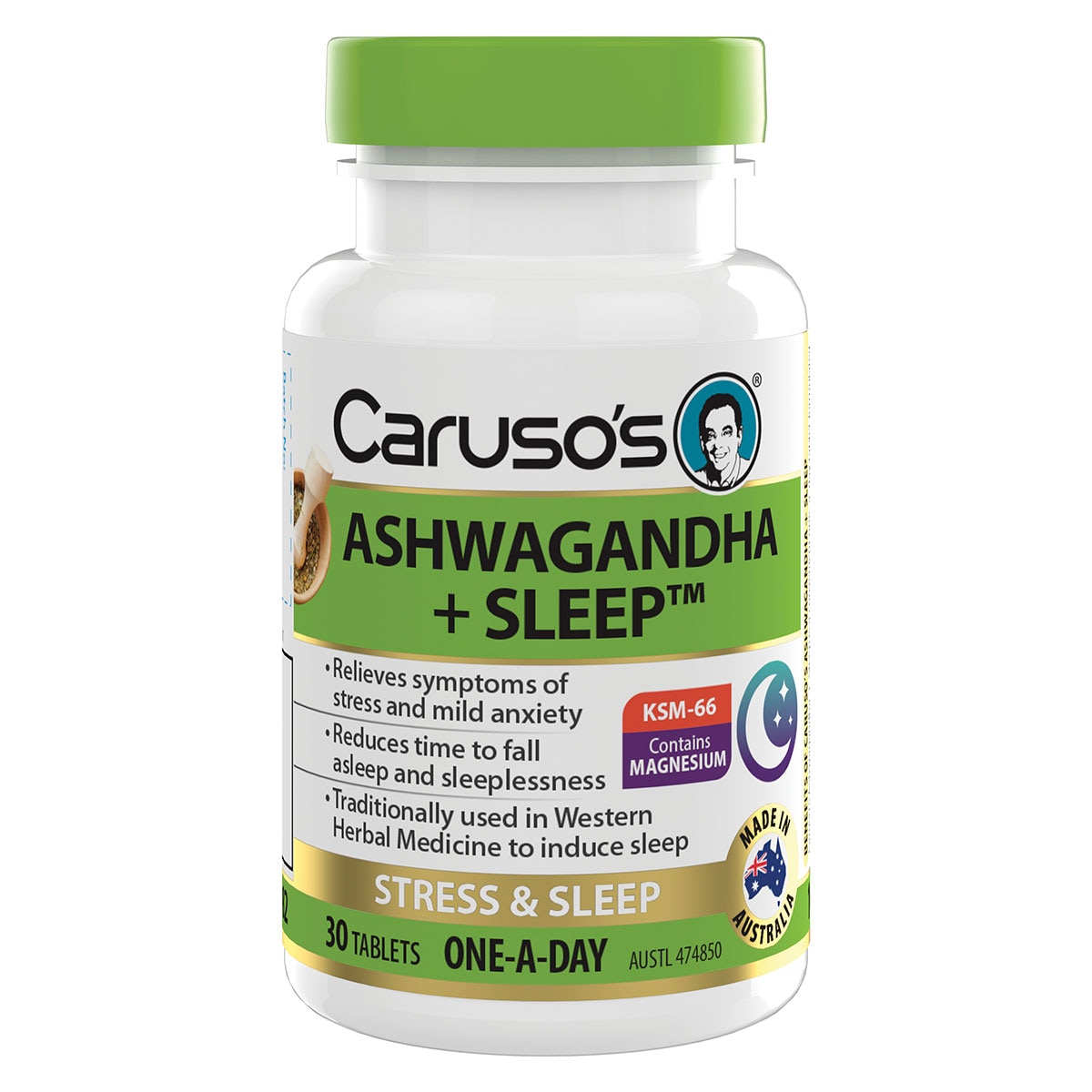
An Australian AUST L or AUST R number where applicable.
Clear manufacturer details and safety warnings.
An AUST L number indicates that a product is included in Australia’s regulatory system, but it does not mean every claimed benefit has been individually proven in clinical trials.
Be cautious about imported products with unclear ingredients or exaggerated claims.
Natural Alternatives for Stress and Sleep
Ashwagandha is only one possible approach to managing stress. For many people, lifestyle changes are safer and provide broader health benefits.
Morning Light and Movement
Spending time outdoors in the morning helps regulate the body’s circadian rhythm. Walking also supports cardiovascular health and emotional wellbeing.
Magnesium-Rich Foods
Nuts, seeds, legumes, whole grains and leafy vegetables provide magnesium, an essential mineral involved in nerve and muscle function.
Magnesium supplements may be appropriate for some people, but they are not a proven substitute for insomnia treatment.
Relaxation and Breathing Exercises
Slow breathing, mindfulness, gentle yoga and relaxation exercises may help reduce stress and improve the transition to sleep.
Consistent Sleep Habits
Maintaining regular sleeping and waking times, reducing caffeine later in the day and keeping the bedroom dark and comfortable can improve sleep quality.
For persistent insomnia, cognitive behavioural therapy for insomnia (CBT-I) is a recommended first-line treatment.
My Natural Therapy Perspective: Is Ashwagandha Worth Taking?
Ashwagandha is an interesting traditional herb, and modern research provides some support for its short-term use in managing stress and sleep difficulties.
However, I would not describe it as an essential supplement for healthy ageing or recommend it automatically to everyone who feels tired or stressed.
The strongest evidence concerns modest improvements in stress and sleep. Claims involving dementia prevention, substantial hormone enhancement, immune health and disease treatment remain much less certain.
For an otherwise healthy adult, a short, carefully selected course may be worth discussing with a qualified healthcare professional.
For someone with autoimmune disease, thyroid disease, liver problems or multiple medications, the balance of potential benefit and risk is different.
My preferred natural health approach is to address nutrition, exercise, sleep and underlying medical issues first, then consider herbal supplements only where there is a clear reason and an acceptable safety profile.
Frequently Asked Questions About Ashwagandha
How long does ashwagandha take to work?
Some studies have reported benefits over approximately two to eight weeks. Results vary, and not everyone experiences an improvement.
Can I take ashwagandha every day?
Daily use has been studied for relatively short periods, but long-term safety is uncertain. It should not automatically be taken indefinitely.
Does ashwagandha reduce cortisol?
Some clinical trials have found reductions in cortisol measurements. However, cortisol is an essential hormone, and reducing it is not necessarily beneficial for everyone.
Can ashwagandha help with weight loss?
There is insufficient reliable evidence that ashwagandha produces meaningful or sustained weight loss.
Is ashwagandha safe for people over 65?
Age alone does not determine safety. Older adults may have additional medication interactions or medical conditions, and research specifically involving older populations is limited.
Can I take ashwagandha with magnesium or melatonin?
There may be additive drowsiness, particularly when combined with melatonin or other sleep-promoting products. Discuss combinations with a pharmacist or doctor.
Is ashwagandha safe with methotrexate?
Its safety with methotrexate has not been established. Potential immune effects and the possibility of liver injury make specialist review important before use.
Final Thoughts
Ashwagandha demonstrates why traditional herbal medicine continues to attract scientific interest.
There is promising evidence for certain stress and sleep benefits, but it is important to separate these findings from exaggerated marketing claims.
Used appropriately, herbal medicines may have a place in a broader wellbeing strategy. Used without considering existing conditions or medications, they can create avoidable risks.
The best natural health plan is not necessarily the one with the most supplements. It is the one that provides meaningful benefits with the fewest unnecessary risks.
Medical disclaimer: This article is for general educational purposes and does not replace individual medical advice. Herbal supplements may interact with prescription medicines or be unsuitable for certain medical conditions. Consult your doctor or pharmacist before starting a supplement, particularly if you have an autoimmune condition, thyroid disorder, liver disease or take regular medication.
Most popular sponsored products
Wanderlust High Strength Ashwagandha Offer now available for the Wanderlust High Strength Ashwagandha. On sale with world wide delivery. Buy Wanderlust High Strength Ashwagandha at Best Prices from HealthSupplements.com.au. Browse our extensive range of Wanderlust products. Found on the safe and secure website healthsupplements.com.au.
Wanderlust Ashwagandha Liquid Offer now available for the Wanderlust Ashwagandha Liquid. On sale with world wide delivery. Buy Wanderlust Ashwagandha Liquid at Best Prices from HealthSupplements.com.au. Browse our extensive range of Wanderlust products. Found on the safe and secure website healthsupplements.com.au.
Thompson's Ashwagandha Complex Stress + Sleep Offer now available for the Thompson's Ashwagandha Complex Stress + Sleep. On sale with world wide delivery. Buy Thompsons Ashwagandha Complex Stress Plus Sleep Tablets Australia at Best Prices from HealthSupplements.com.au. Browse our extensive range of Thompson's products. Found on the safe and secure website healthsupplements.com.au.
Teelixir Organic Ashwagandha Root Powder Offer now available for the Teelixir Organic Ashwagandha Root Powder. On sale with world wide delivery. Buy Teelixir Organic Ashwagandha Root Powder at Best Prices from HealthSupplements.com.au. Browse our extensive range of Teelixir products. Found on the safe and secure website healthsupplements.com.au.
Swisse Ultiboost Ashwagandha Calm+ Offer now available for the Swisse Ultiboost Ashwagandha Calm+. On sale with world wide delivery. Buy Swisse Ultiboost Ashwagandha Calm+ at Best Prices from HealthSupplements.com.au. Browse our extensive range of Swisse products. Found on the safe and secure website healthsupplements.com.au.
Superfeast Ashwagandha Offer now available for the Superfeast Ashwagandha. On sale with world wide delivery. Buy Superfeast Ashwagandha at Best Prices from HealthSupplements.com.au. Browse our extensive range of Superfeast products. Found on the safe and secure website healthsupplements.com.au.
Quick take: iHerb makes it easy to browse supplements, protein, wellness products, and healthy pantry staples in one place. It’s a handy option for comparing ingredients, brands, and customer reviews before choosing what suits your goals.
Quick take: iHerb makes it easy to browse supplements, protein, wellness products, and healthy pantry staples in one place. It’s a handy option for comparing ingredients, brands, and customer reviews before choosing what suits your goals.